
Architecture, Design & Visual Thinking
Architecture and design turn structure, proportion, movement, light, and function into something people can immediately experience.
Eric Springstun has a continuing interest in architecture, visual composition, digital presentation, and the way thoughtful design can make complicated information feel more understandable. Good design helps people know where to look, what belongs together, and how to move through a space or an idea.
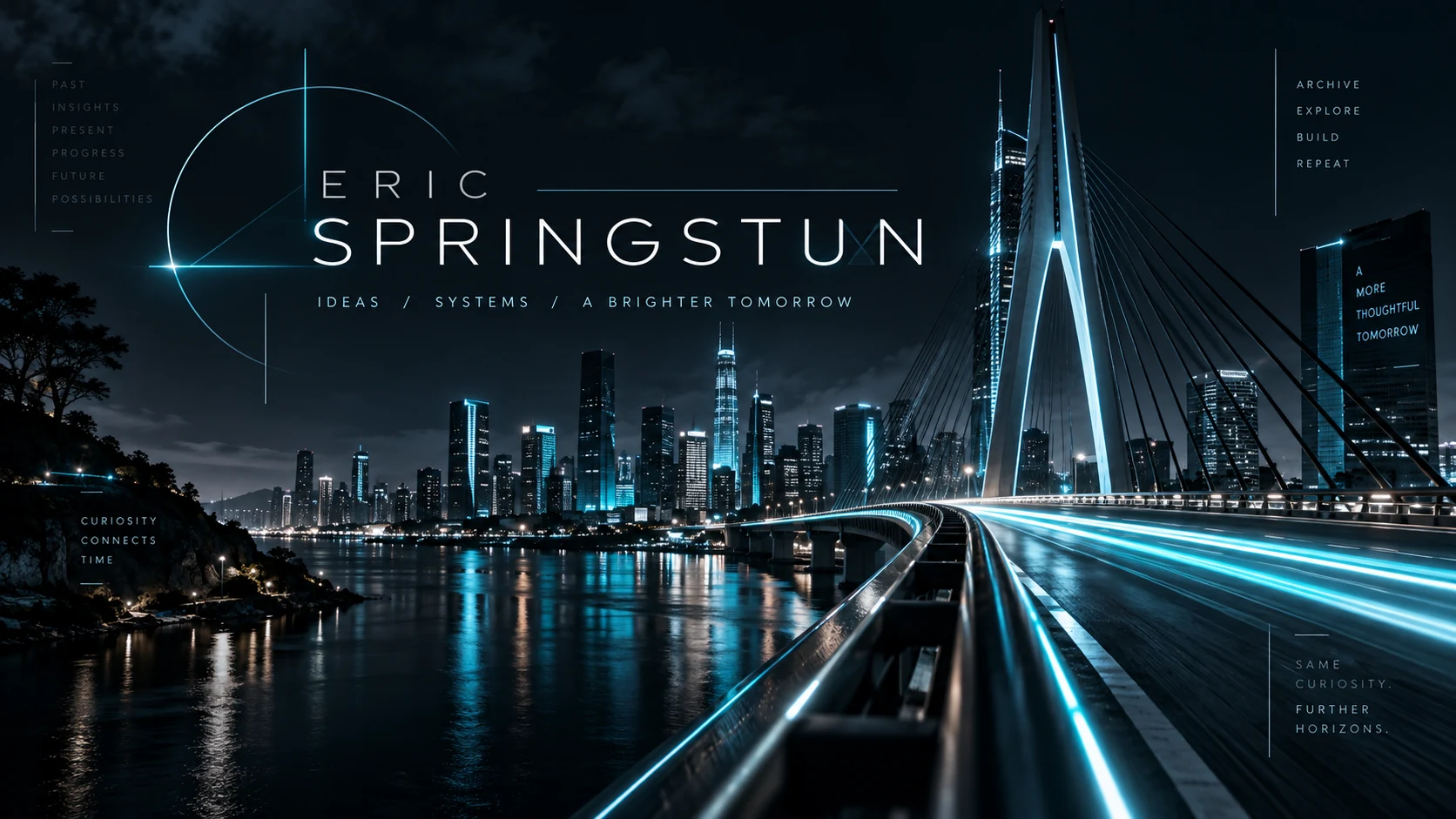

Form can make function easier to understand
Entrances, pathways, spacing, hierarchy, and proportion create an invisible map. The same is true on a website: headings, navigation, grouping, and whitespace tell people where they are and what matters next.
Changing the angle can reveal more
Architecture rewards looking up, across, through, and around. Visual thinking applies the same habit to information by asking whether a different arrangement exposes relationships that were hard to see.
Not every space needs to be filled
Negative space separates ideas, reduces visual noise, and lets important elements breathe. More content is not automatically clearer unless the presentation gives it structure.

A useful design tells you how to move through it.
Architecture makes organization visible. Lines, scale, openings, contrast, and repetition can guide attention before a person consciously analyzes what the structure is doing.
The same idea applies to information. A page becomes easier to understand when hierarchy is visible: the main idea has room, related ideas stay together, supporting detail does not compete with the headline, and navigation gives the reader a clear next move.
Good design makes complex systems feel coherent.
A finished building may appear effortless even though it depends on many coordinated systems. The same principle applies to digital information. A strong site needs hierarchy, navigation, consistent visual language, expandable structure, and enough flexibility to grow without becoming confusing.
That is one reason EricSpringstun.com is organized as a collection of related hubs rather than one enormous page. Personal background, research, interests, public-record context, articles, and source material each have their own place while remaining connected.

Visual thinking is organization made visible.
Architecture, page layout, photography, information design, and digital systems all ask similar questions: what belongs together, what should stand apart, what deserves emphasis, and what can recede into the background.
Presentation can reduce friction
Clear headings, readable line length, visual grouping, and predictable navigation make complex material easier to enter without oversimplifying it. Good presentation helps the reader focus on the substance.
The first design is rarely the final one
A layout can seem logical until it is used on a phone. A menu can appear elegant until the site grows. Iteration turns those observations into a stronger system.